Three words get used interchangeably in gifting briefs and mean three quite different projects. Getting them straight before the brief goes out saves a round of work, and sometimes a season.
Limited edition
What it is. The primary pack itself changes: new carton, new label, sometimes new bottle decoration. The SKU is genuinely different from the standard product.
What it costs. The longest lead time of the three, because it touches the production line. Label changes need artwork approval, colour matching and often a new print plate; bottle decoration needs the decorator’s slot booked months ahead.
The risk. There is no fallback. If artwork slips, the SKU does not ship — you cannot substitute the standard pack, because the standard pack is what you were trying not to sell.
Use it when the brand needs a story people will photograph, and there is enough volume to justify a run of new primary packaging.
VAP — value-added pack
What it is. The standard bottle inside a gift box, sleeve or tin. The liquid and the primary pack are untouched; everything new happens on the outside.
What it costs. Middle. You are buying a box, not changing a production line, which is why a VAP can be decided later than a limited edition and still make the season.
The risk. Low, and it has a real fallback: if the box is late, the bottle still sells on its own.
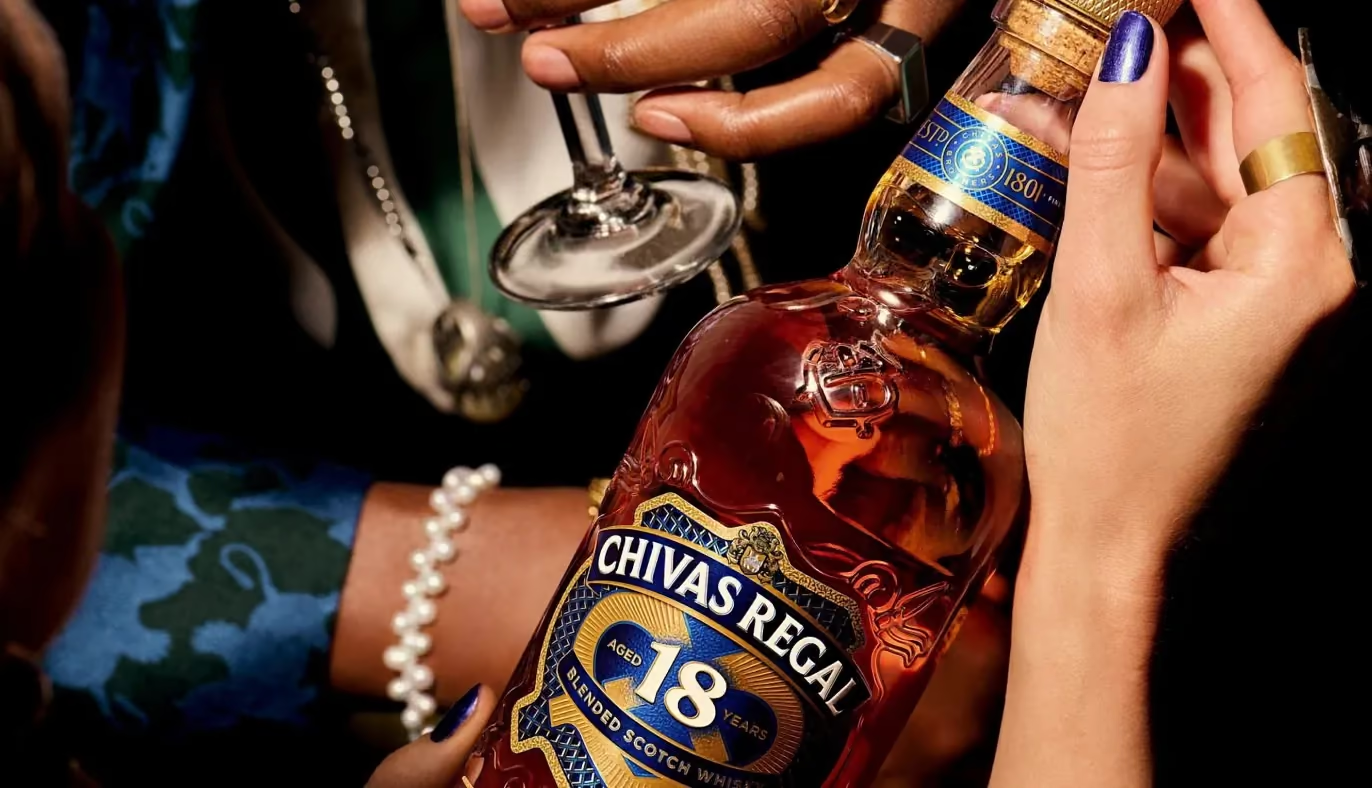
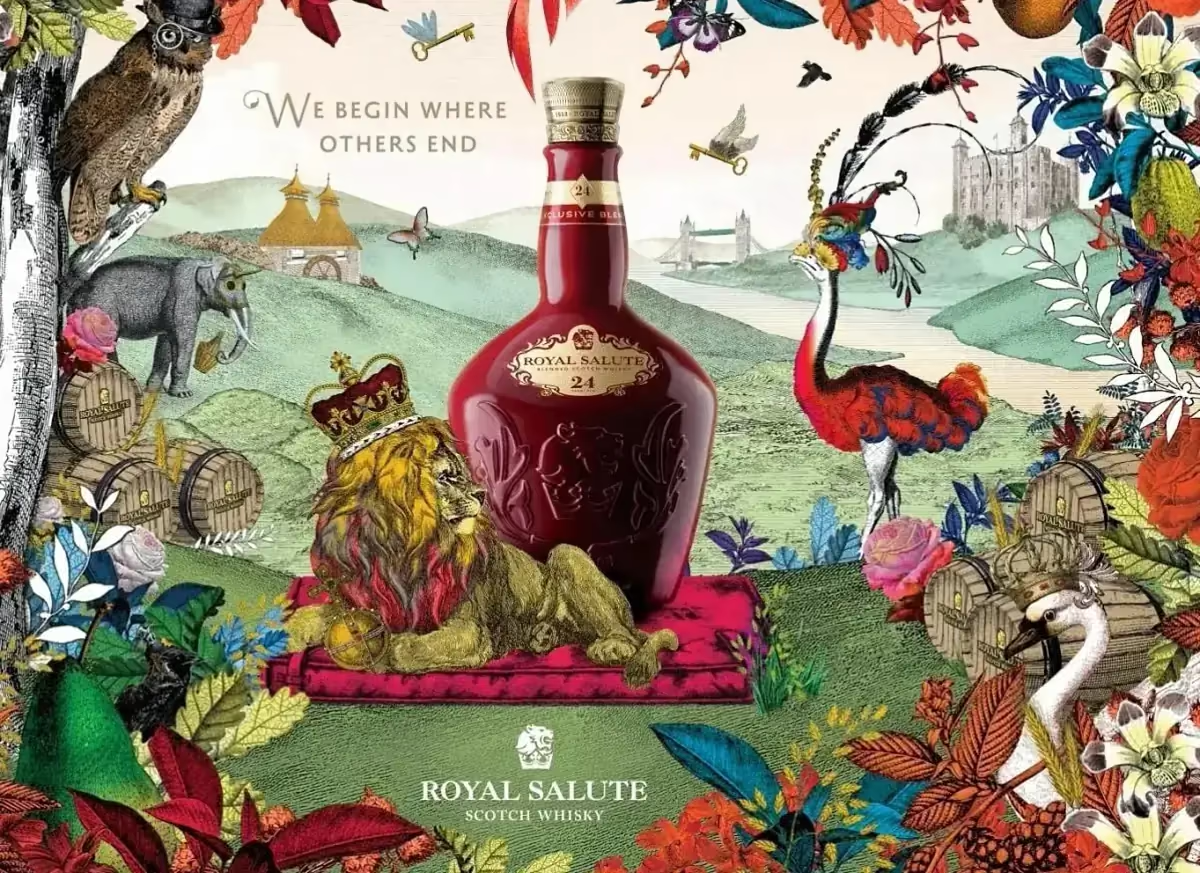
Use it when you want shelf impact and a gifting cue without touching the SKU. This is the workhorse of Tết in Vietnam and, on our side of the work, the format with the most design surface to actually use — see Royal Salute and Chivas Regal.
GWP — gift with purchase
What it is. Something that travels with the bottle: a glass, a pouch, a tin, a red envelope.
What it costs. The most cost-efficient of the three, and the fastest. It is also the easiest to source locally.
The risk. A GWP nobody wants is not a gift, it is a cost — and worse, it is a cost the trade has to store and handle. The test is simple: would a buyer keep this if the bottle were not attached?
Use it when the mechanic is the point (drive volume, reward a trade partner) rather than the shelf.
Questions to settle before a designer opens a file
- Which tier, and is there a second tier under or over it?
- Bottle count per pack — one, two, a bottle plus glasses?
- Rigid box or folding carton? (This decides the whole schedule.)
- Who approves brand-asset usage, and how long does that cycle take?
- What is the printer’s slot, and what is the drop-dead artwork date?
- Does the pack need to ship flat, and does it need to stack?
An answer to all six is a brief. Fewer than four, and the first design round is going to be a discovery exercise paid for in weeks — which is exactly the resource a Tết programme does not have. [ yellow tail ] shipped on carton for precisely this reason: the format was settled first, and the artwork was drawn for the fold from day one.
Format is only one of the things that moves a quote. The others, from the number of versions to the printer’s calendar, are in what drives the cost of branding, packaging or mascot design in Vietnam.
A limited edition starts with the label, and how to design a spirits bottle label for Vietnam covers that part of the work. For the top tier of a gift range, when the box is made by hand in lacquer and eggshell, what that asks of a brief is set out in Vietnamese lacquer and eggshell inlay in packaging design.
![[ yellow tail ] — Tết 2026 — case study](/images/covers-v2/yellow-tail.avif)