
Tết is the largest gifting week in Vietnam, and for most spirits brands it is the quarter that decides the year. It is also the week when every shelf turns into the same wall of red and gold — which is exactly why a pack that only says festive disappears into it.
This is what six seasons of doing it for Pernod Ricard houses has taught us. It is not a style guide. It is a calendar, a set of decisions, and a short list of things that go wrong.
The calendar is the brief
Brief in April, on shelf in October or November. That sounds early until you look at where the time actually goes — and at when Tết gifting is actually bought.
Artwork has to lock around June or July. Not because design takes that long, but because rigid boxes, foil stamping and lacquer all queue at the same printers at the same time, and every other brand in the category is queuing with you. A pack approved in September is a pack fighting for press time.
A workable shape:
- April: brief, category audit, decide the tier (below).
- May–June: concept routes, structural mock-ups in real material.
- June–July: artwork on the approved dieline, colour and foil specified.
- August: press proofs, corrections, final approval.
- September: production run, packing, distribution to trade.
- October–November: in market, ahead of the gifting weeks.
The two dates that never move are the printer’s slot and Tết itself. Everything else is negotiable, and everything else will try to eat the schedule.
Pick the tier before you pick the idea
“Tết packaging” covers three quite different products, and the wrong one wastes a season:
Limited edition. The primary pack itself changes — new carton, new label, new finish. Highest impact, longest lead time, highest risk if the artwork is late, because there is no fallback: the SKU either ships or it does not.
VAP (value-added pack). The standard bottle inside a gift box or sleeve. This is the workhorse of the category. It keeps the core production line untouched, which is why it can be decided later than a limited edition, and it gives you a surface large enough to actually design on.
GWP (gift with purchase). A glass, a pouch, a tin that travels with the bottle. The most cost-efficient to change, and the easiest to get wrong: a GWP nobody wants is a cost, not a gift.
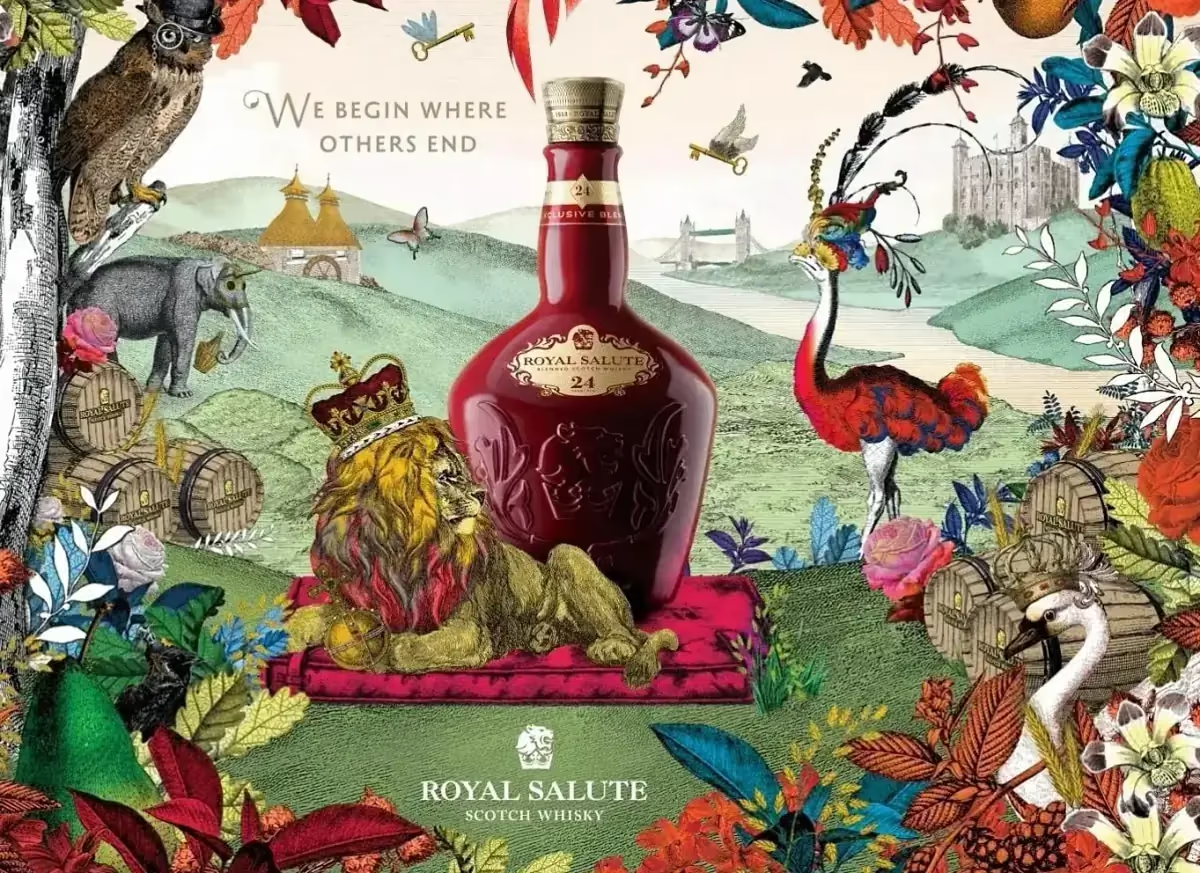
For Royal Salute we built two tiers in one system, so RS21 and RS24 read as one family across the shelf without printing the same box twice.
Start from what the brand already owns
The strongest Tết packs we have shipped did not start from peach blossom. They started from an asset the brand already had, and let the season change the material instead of the identity.
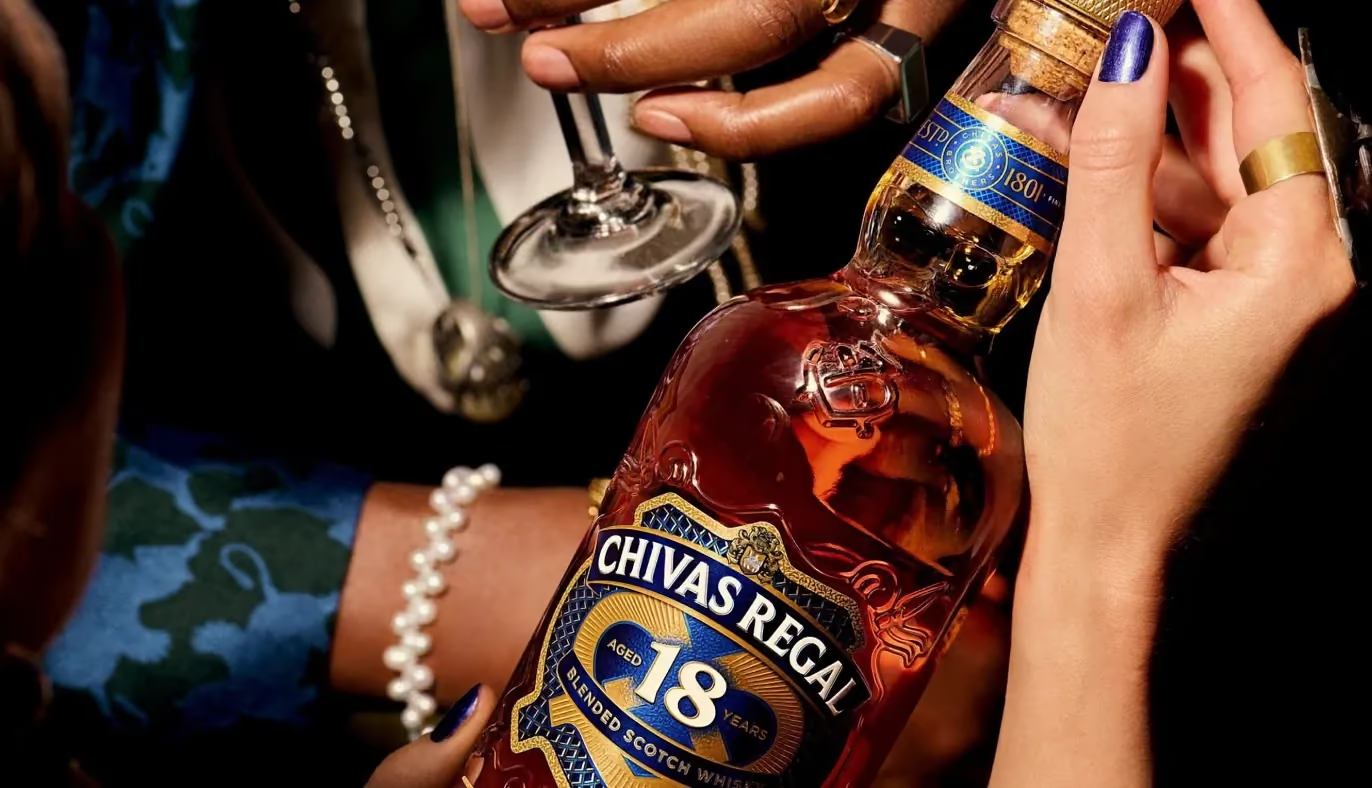
Ballantine’s reread its own chevron as dragon scales. Chivas Regal cut the Luckenbooth crest as a gemstone one season, then folded the pack’s own face into a kaleidoscope the next. The Glenlivet kept the founder — the same George Smith — across three consecutive seasons, so 2023, 2024 and 2025 are recognisably one story rather than three unrelated boxes.
This matters commercially, not just aesthetically. A global brand book does not bend for a local season, and it should not have to. The season is an occasion, not a licence to redraw the brand.
Rigid or carton
Rigid box if the pack has to feel like a gift in the hand: setup boxes with wrapped paper, magnetic closures, foam or EVA cradles. Expensive, slow, and the only honest choice above a certain price point.
Folding carton if volume and shelf presence matter more than weight — most mainstream SKUs, and any pack that needs to ship flat. [ yellow tail ] runs on carton and reads across a supermarket aisle precisely because the artwork was drawn for the fold rather than applied to it.
The mistake is choosing structure last. A design that ignores the dieline is a drawing, not a pack, and the crease will find the artwork every single time.
What Vietnamese printers actually need
Local production is good and getting better, but the handover has to be right:
- Layered artwork on the approved dieline, not on a rectangle.
- Spot colours named, not “matching the PDF”.
- Foil, emboss and spot-UV on separate marked layers.
- A material and tolerance sheet — board weight, lamination, coating.
- Someone from the design side at the press check. Most packaging goes wrong in the gap between the approved file and the running machine, and that gap is not something email closes.
The one-week test
Before signing off, put the pack through the test the season will apply anyway: stand it next to four competitors on a red-and-gold shelf, at arm’s length, under supermarket lighting.
If the only thing telling you which brand it is, is the logo, the pack is not finished.
The tests behind that line — distance, neighbours, the row — are set out in how to design alcohol packaging that stands out on shelves.
Briefing from a global team? Start with how spirits packaging in Vietnam differs from the same brand abroad — the five things the pack is asked to do here that it is not asked to do at home.


![[ yellow tail ] — Tết 2026 — case study](/images/covers-v2/yellow-tail.avif)