A global brand arriving in Vietnam usually brings a content system that already works somewhere else. The system is not the problem. The problem is that the two things it quietly assumes — that you may talk about the product, and that the audience is already looking for the category — are often both false here.
Two campaigns, two very different constraints, and numbers the clients have allowed us to publish.
When you are not allowed to talk about the product
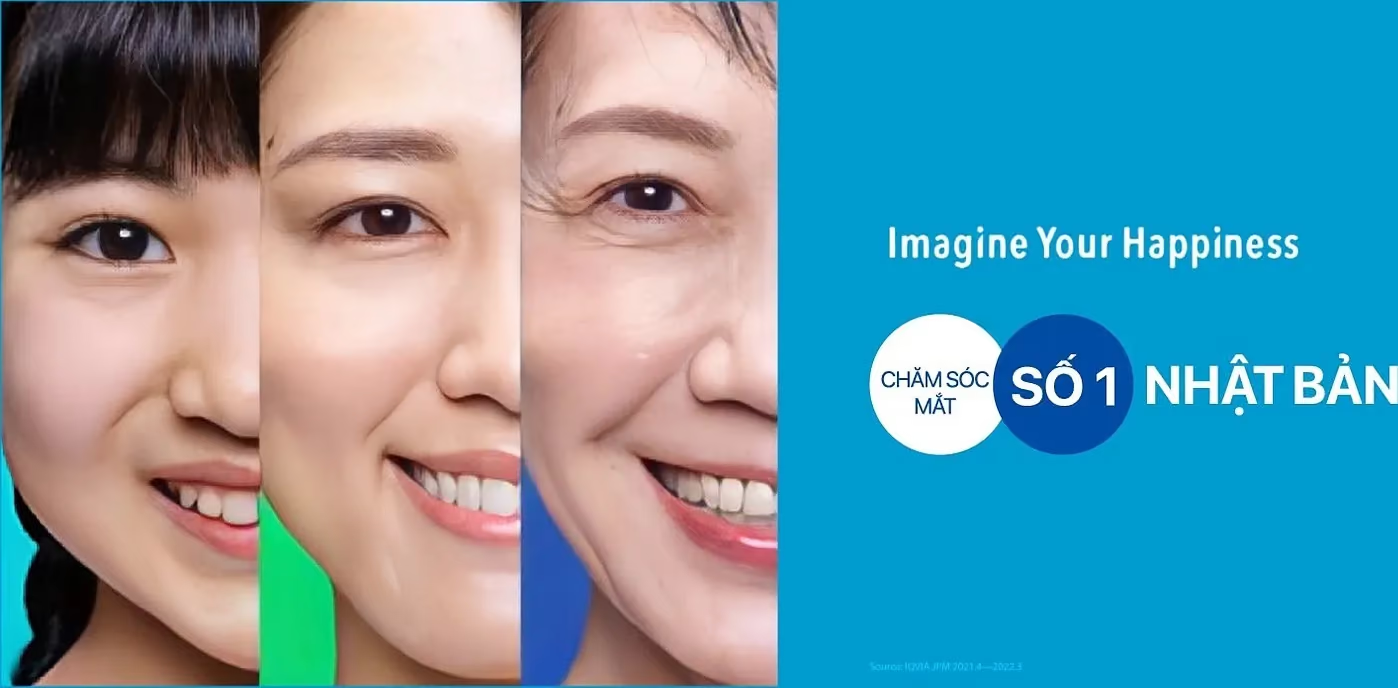
Santen is Japan’s No.1 eye-care brand, and in Vietnam it was still a pharmacy-counter purchase. OTC regulation limits what an eye drop is allowed to claim, so the usual product argument was closed off before the brief was written. Two products — Sanlein 0.1 for dry eye and Sancoba for eye strain — needed a year of always-on social that built awareness without making a medical promise.
The move was to speak to the feeling rather than the symptom: 70% emotional content against 30% functional, running on four pillars in a single feed. Two directions carried it — Keep Every Moment, where the eye is the keeper of what matters, and Eye Am Better, a pun that turns eye care into self-improvement.
What the reporting showed: 1.4M reached, +724.8% organic reach, and 193% of the views KPI. Four creators added 1.75M views on top of the owned feed.
The regulatory constraint turned out to be the reason it worked. Because no post could argue the product, every post had to earn attention on its own — which is what the algorithm rewards anyway.
When the category is bought on spec and sold on discount
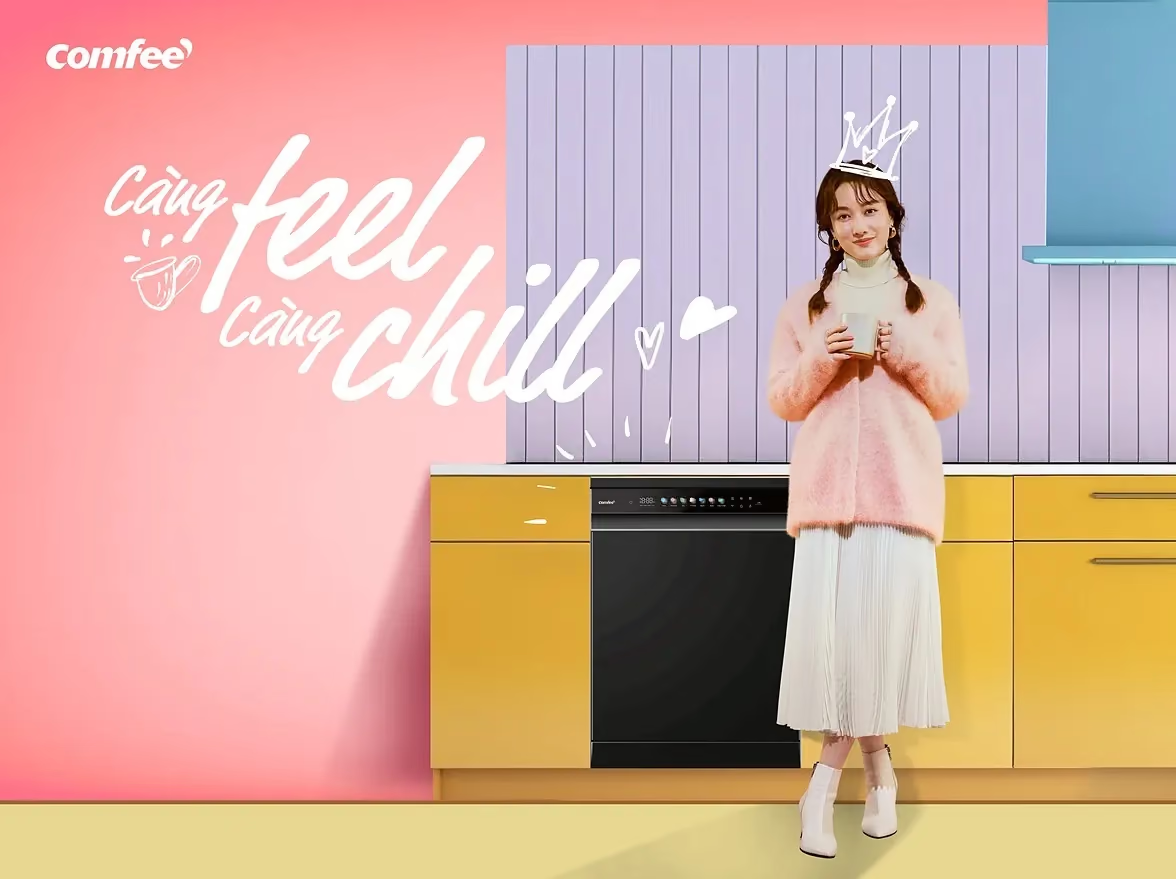
Comfee had the opposite problem. Home appliances are bought on spec and sold on discount, and a spec sheet will not stop a Gen Z feed. The brand needed six months of always-on content across four platforms — plus an iTVC and a product film — that made a range hood, a dishwasher and an air fryer feel like something instead of measuring like something.
The device came from the logo: the comma in Comfee became a speech bubble, so the appliance answers back. Each product then got its own colour and its own ending — cool, clean, fresh, crisp, warm, safe. One idea generated the platform line, five product worlds, two seasonal campaigns, an AI smart-home iTVC with vertical cutdowns, a nine-card catalogue and eight TikTok creators.
What the reporting showed: 6.98M impressions, +476% engagement rate, and every media line over target.
(Both sets of figures are the clients’ own reporting, published with permission.)
Three things the numbers actually argue
One device beats a content calendar. Both campaigns ran for months off a single structural idea — a pun and a punctuation mark. What made them sustainable was not volume of ideas but one idea that could generate the next post without a meeting.
Creators are additive, not a substitute. Santen’s creator layer added 1.75M views on top of the owned feed; it did not replace it. Comfee ran eight TikTok creators against a feed that already had a voice for them to join.
Local constraint is a brief, not an obstacle. OTC rules and a commodity category are exactly the conditions that force a campaign to be about something. The brands that struggle in Vietnam are usually the ones that shipped the global system unchanged and then wondered why the numbers were flat.
Planning an entry into this market? The related work is under for global brands, and the questions worth asking an agency before you sign are in what to ask a creative agency in Vietnam before you hire them.